
FREE CONSULTATIONS
Fort Worth 817-336-5533
Lubbock 806-491-4911


Recent Blog Posts
The New Mexico Civil Rights Act: Protecting New Mexico
The New Mexico Civil Rights Act: Protecting New Mexico
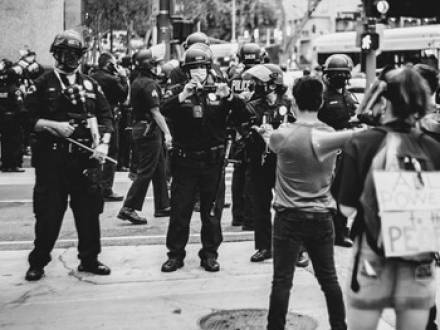
We are only safe when those who interpret and enforce the law do so fairly and justly. By the time my Law Review Article, Foreman, S. Rafe Qualified Immunity: A Legal Fiction That Has Outlived its Utility, 48 Ohio N.U.L.Rev. 503, was published in 2022, the majority of civil rights complaints were subject to dismissal under the court created defense of qualified immunity. This resulted in valid claims being dismissed by 12B6 motions or summary judgment as a result of a judicially created defense to the Constitutional rights of all citizens. But New Mexico took a bold step to cure this injustice.
The New Mexico Civil Rights Act (NMCRA), enacted in 2021, represents a major shift in how civil rights violations are addressed within the state of New Mexico. The law was designed to strengthen accountability for government officials and provide residents with clearer pathways to seek justice when their constitutional rights are violated.
Standing Up for New Mexico Workers: Legal Representation After Discrimination and Retaliation
Standing Up for New Mexico Workers: Legal Representation After Discrimination and Retaliation

In workplaces across New Mexico, employees show up every day expecting to be judged on their work, their dedication, and their professionalism. Unfortunately, that expectation is not always met. When discrimination or retaliation enters the workplace, it doesn’t just affect someone’s job—it can undermine dignity, financial security, and a person’s sense of fairness. Hutchison & Foreman, P.L.L.C. can help. Our team of New Mexico licensed attorneys and trained staff have been representing the workers of this state from Jal to Four Corners and from Deming to Raton since our senior partner, S. Rafe Foreman, was licensed here in 1989. Micheal Bristow is also licensed in this state and Grace Reed’s application is pending. So, whether you are in Santa Fe, Roswell, Las Cruces or Albuquerque, we have you covered.
Can My Employer Force Me to Return to the Office in Texas?
Can My Employer Force Me to Return to the Office in Texas?

For many Texas employees, remote work shifted from a temporary pandemic solution to a long-term reality. Now, as more companies require workers to return to the office, employees are asking an important question:
Can my employer legally force me to return to the office in Texas?
The short answer is: In most cases, yes. But there are important exceptions—especially if medical conditions, disabilities, or protected rights are involved. Understanding where Texas law draws the line can help you determine whether a return-to-office mandate is lawful—or whether your employer may be crossing it.
Texas Is an At-Will Employment State
Texas follows the doctrine of at-will employment. This means employers generally have broad authority to set workplace policies, including:
Can You Be Fired Without Warning in Texas?
 Understanding At-Will Employment and Wrongful Termination
Texas employees are often shocked to learn they can be fired without warning. While this is sometimes legal, it is not always lawful. Understanding the difference between at-will employment and wrongful termination is critical if you’ve recently lost your job or fear termination. Below, we explain when an employer can fire you without warning in Texas—and when doing so may violate the law.
Texas Is an At-Will Employment State — But That’s Not the Whole Story
Texas follows the doctrine of at-will employment. This means that, in most cases, an employer may terminate an employee at any time, for almost any reason, or for no stated reason at all—with or without warning. Likewise, employees are generally free to leave a job at any time. However, at-will employment does not give employers unlimited power. An employer cannot fire an employee for a reason that violates state or federal law. The reason for the termination—not the lack of warning—is what determines whether a firing is legal.
Medical Malpractice Attorney

No one goes into a procedure, a medical office or hospital with the thought that their doctor, nurse. or health care professional is going to make a mistake that may result in death or permanent life-threatening injuries. But the truth is many thousands of Americans die each year because of medical errors according to a comprehensive, highly regarded hospital survey conducted by Harvard University, more than 1,000,000 people suffer injuries each year as a result of medical mistakes.
Medical errors can be caused by treating doctors, surgeons, nurses, pharmacists, and other health care professionals. Medical errors can result from neglect, abuse, incompetence or simply mistake. Individual practitioners, hospitals, and even nursing homes or loan term health care facilities can be held liable for medical malpractice. Common types of medical malpractice include:
- birthing injuries
- missed or delayed diagnosis
- anesthesia errors
Attorney Texas and New Mexico
In Texas and New Mexico we hold strong to the concept of personal responsibility and accountability. At the law firm of Hutchison & Foreman, PLLC, our attorneys endeavor to hold wrongdoers accountable for their actions in personal injury, employment, consumer rights and civil rights actions.
At Hutchison & Foreman, PLLC, we are always open to clients who have suffered from unexpected calamities, crashes and personal losses. As a professional personal injury attorneys in Texas, New Mexico, Oklahoma and Missouri we are here to serve you. I’d like to take some time here to list some examples of the top personal injury cases that we represent:
- Wrongful death
- Shooting deaths
- Auto negligence
- Trucking negligence
- Nursing home abuse /nursing home neglect
- Malpractice and other professional negligence claims
- Defective products/ defective drugs/ defective medical devices (product liability)
- Slip and fall
New Mexico Civil Rights Act

One of the most important pieces of legislation in New Mexico State history became law this year. The passage of the New Mexico Civil Rights Act provides the citizens of New Mexico with additional protections against infringements on their freedoms and civil liberties. Many attorneys are hailing it as a breakthrough in protecting residents’ civil rights.
Many Americans are familiar with excessive force cases dating back before Rodney King and continuing through George Floyd. The greatest impediment to prosecuting these civil rights cases is the judicially created notion of qualified immunity. There has been much debate and discussion on Capitol Hill regarding legislation that would abolish qualified immunity, but New Mexico took the bold step of abolishing it for the citizens of New Mexico immediately while the federal legislation languishes in committee.
The New Mexico Civil Rights Act allows New Mexicans to launch lawsuits against governmental entities in state court if they believe their civil rights have been violated, and it eliminates "qualified immunity" as a legal defense in such complaints. Qualified immunity shields government workers from personal liability under federal law when workers violate people’s constitutional rights.
Default Judgements

A small business man recently called and indicated that a limited liability company he ran had been sued. He had filed a response to the allegations of the complaint with the court and sent a copy to the attorney for the plaintiff. The plaintiff’s lawyer immediately filed a motion to strike the answer and for default judgment on the basis that the response was not a proper answer to the complaint because it failed to follow the requirements of an answer, and because it had not been signed by an attorney. Since the time to file a proper answer had expired, the plaintiff asked the court for a default judgment.
The Supreme Courts of other states have been asked whether a notice of appeal by a corporation signed by an officer of the corporation who was not an attorney was valid. The courts concluded that it was not a valid notice of appeal, and therefore, the appeal was dismissed. There were primarily two bases for that decision; first, under some states’ law and statutes, a corporation, except in small claims court, must be represented by an attorney, and second, in that case, the notice of appeal filed by a person who was not an attorney was determined to be the unauthorized practice of law, that is to say, the practice of law by someone other than a licensed attorney.
Hutchison & Foreman Sues SAPD for Injuries to Clients
 A San Antonio couple is suing the San Antonio Police Department and the city in federal court over a 2019 arrest. The pair say they were wrongfully arrested after being assaulted by a police officer. The married couple own Garden Bistro Bar on North Blanco Street. The suit stems from an argument between the officer and the owners over a party at their restaurant after it was closed. View the full story.
Do I Have A Claim For Hostile Work Environment?

Navigating work related claims can be tricky under Texas law. Many people ask us "do I have a claim for hostile work environment?" Our answer is that it is very fact intensive. There is no such thing as hostile work environment claim unless it is specifically related to race, age, sex, religion, national origin, or a disability (or retaliation for reporting or opposing one of those categories).
Texas is a very employer friendly state. It is an "at will" state, meaning that your employer can hire you, fire you, promote you or demote you for a good reason, a bad reason or no reason at all IF it is not related to race, age, sex, religion, national origin, a disability, retaliation or a few whistleblower exceptions. We call these the "protected categories" because the law does provide protection for bad conduct related specifically to these categories. Your supervisors, co-workers or management are free to be mean, obnoxious, unfair, unfriendly and/or unkind so long as it does not relate to one of the categories mentioned. In other words, if the bad person is an "equal opportunity" bad person—they're mean, obnoxious, unfair, unfriendly and/or unkind to everyone or it is not related specifically to one of the protected categories, then it is not against the law. There is no claim for hostile work environment unless you can prove that the bad conduct is specifically related to one of the protected categories or retaliation for reporting/opposing discrimination in one of the categories.












We're here to fight for you.
Call us today at 817-336-5533 or 806-491-4911 for a free consultation.
Results listed are not a guarantee or indication of future case results.


500 E 4th Street, Suite 100, Fort Worth, TX 76102
817-336-5533

